Category: E-commerce operations
Author: AorBorC Technologies
Published: July 14, 2026
Shopify's July 2, 2026 developer changelog is small on the surface and important in practice: the buyer journey intercept hook in checkout UI extensions, plus the block progress capability behind it, is deprecated in API version 2026-07. Shopify says existing extensions continue to work on current and older API versions, but the API will be removed later, and merchants enforcing business rules there should migrate to cart and checkout validation Functions.
That is not just a developer cleanup. It changes where checkout rules should live.
A browser-side block can feel convenient because it sits close to the shopper experience. The problem is that operational rules rarely belong only in the interface. Minimum order quantities, restricted products, B2B credit checks, shipping eligibility, purchase order requirements, customer tax handling, and discount restrictions all affect order integrity downstream. If those checks are not aligned with inventory, finance, support, and ERP logic, checkout becomes the first place the business discovers a system-design problem.
AorBorC's view: treat this migration as an order-to-cash audit, not a ticket to swap one API for another.
What changed
Shopify now points merchants away from useBuyerJourneyIntercept for enforcing merchant business rules. For checkout rules, Shopify recommends cart and checkout validation Functions. Shopify's Function documentation says these validations run server-side and cover checkout surfaces including accelerated options such as Shop Pay, PayPal, Google Pay, and Apple Pay.
For operational leaders, the useful takeaway is simple: checkout policy should become shared system logic, not theme or extension behavior that only some surfaces experience.
Why operations teams should care
When checkout rules move server-side, the rule design has to be more precise. That is good news if the team uses the moment to clean up the full handoff.
A B2B store may need product minimums by company location. A made-to-order catalog may need deposit, production, and fulfillment checks before an order reaches the ERP. A regulated catalog may need customer eligibility and address restrictions. A wholesale store may need payment terms, purchase order numbers, credit limits, or tax fields before finance can reconcile the sale.
Those are not only commerce rules. They touch the product catalog, inventory reservation, order creation, ERP modules, finance workflows, warehouse picks, customer support, reporting, and exception handling.
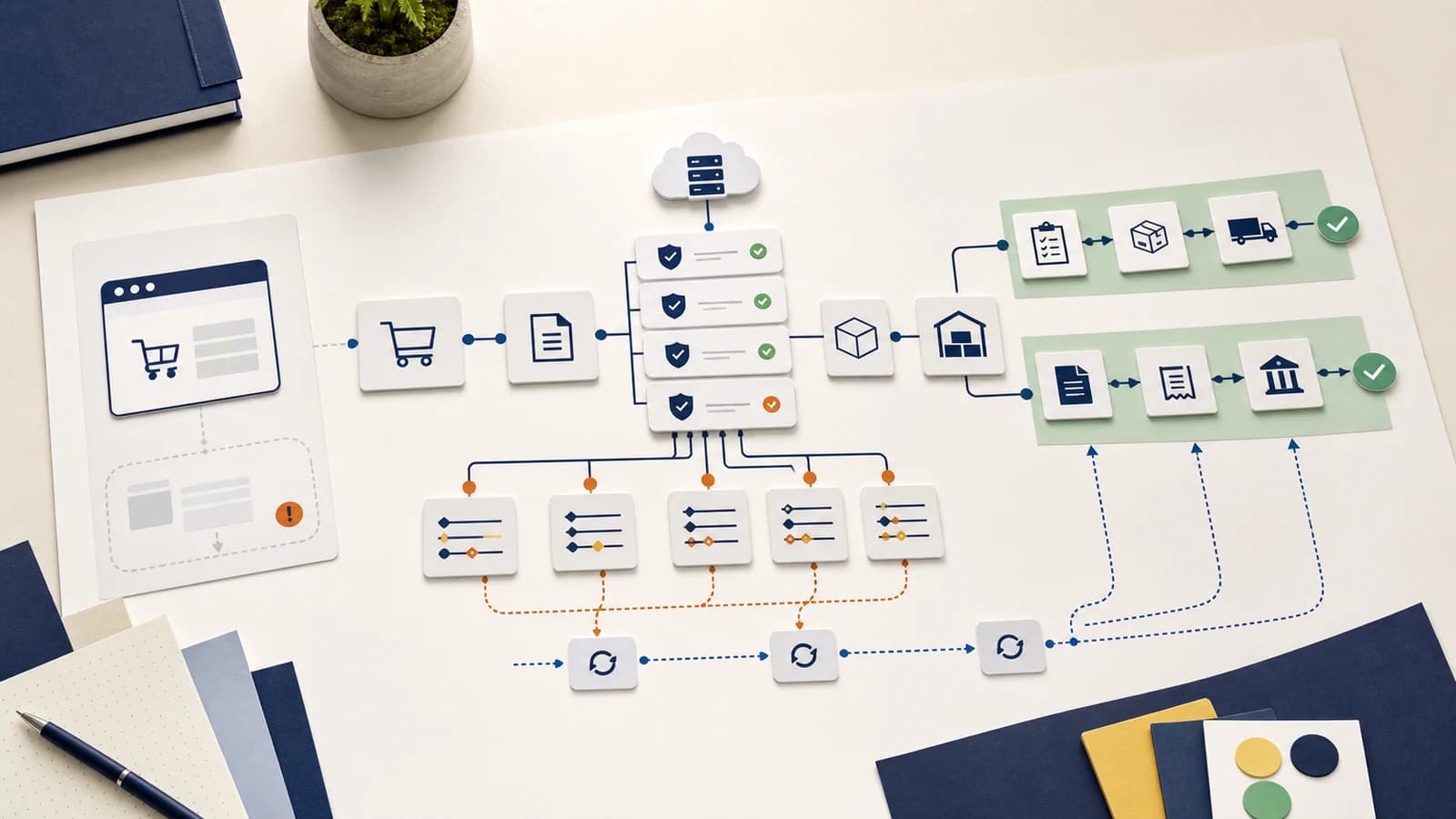
If your Shopify implementation already talks to Odoo, Zoho, NetSuite, QuickBooks, custom middleware, or a warehouse system, the migration should include a system map. Decide which rule is owned by Shopify, which rule is owned by the ERP, which data has to be synced before checkout, and which exceptions need human review.
The practical migration checklist
Use this as the working checklist before changing production checkout logic:
- List every checkout block, warning, validation, discount rejection, shipping restriction, and B2B rule currently handled by UI extensions, theme code, custom apps, middleware, or manual review.
- Mark which rules affect downstream operations: inventory availability, product substitutions, order routing, tax handling, payment capture, credit terms, purchase orders, deposits, fulfillment, invoices, refunds, and reporting.
- Separate shopper guidance from hard business policy. Helpful prompts can stay near the interface; order-validity rules should be validated server-side where possible.
- Map each rule to its system of record. For example: product eligibility in the catalog, stock and warehouse constraints in inventory, credit terms in ERP or finance, customer status in CRM, and support exceptions in the help desk.
- Test every affected surface, not just standard checkout. Include accelerated checkout, B2B flows, draft order checkout, customer account flows, and any order creation path your store relies on.
- Confirm ERP and e-commerce handoffs. The order that passes validation should carry the fields finance and operations need: customer identifiers, tax data, product and variant data, discount context, fulfillment location, payment terms, and exception flags.
- Build a rollback and monitoring plan. Track blocked orders, failed validations, abandoned carts near rule gates, integration errors, and support tickets created from checkout exceptions.
Where the hype is not useful
Do not turn this into a generic "headless commerce modernization" project unless the business actually needs that. The concrete job is narrower: move rules that decide whether an order is valid into a place that is consistent, testable, and connected to the systems that fulfill and reconcile the order.
Also do not assume server-side validation fixes bad data. If the catalog has inconsistent product metadata, if inventory is stale, or if ERP customer terms are not synced, a Function can only enforce whatever truth it receives. The migration should expose those gaps early.
AorBorC implementation view
AorBorC would approach this in four passes:
- Workflow audit: document the current Shopify checkout, custom app, ERP, inventory, finance, and support touchpoints.
- Rule ownership: decide which system owns each rule and what data needs to be available at checkout.
- Implementation: build or revise the Shopify validation layer, integrations, ERP module behavior, reporting, and exception workflow.
- Human-reviewed launch: run test orders through normal, edge-case, and failure paths before the rule becomes a production gate.
This is where a founder-led Zoho, AI, ERP, and e-commerce systems partner is useful. The work is not only writing a Function. It is making sure the checkout rule matches the operating model, the ERP receives clean orders, finance can reconcile without detective work, and support knows what happened when a customer is blocked.
Related AorBorC service paths
- E-commerce store development for Shopify storefront, checkout, catalog, and order-flow work.
- ERP module development for inventory, finance, approval, and order-management logic around commerce operations.
- Zoho integrations for CRM, Books, Desk, Flow, Creator, and third-party handoffs.
- Plan my project if your team needs a checkout-to-ERP workflow review before changing live order rules.
Business takeaway
Checkout validation is becoming less of a front-end trick and more of an operating-system contract. The teams that benefit will be the ones that map the order lifecycle before they migrate the code.