
Deluge scripting in Zoho CRM is a tool that helps you handle and transform customer data efficiently. It allows businesses to go beyond basic automation by writing custom scripts to clean, process, and enhance their CRM data. Key benefits include automating repetitive tasks, standardizing data formats, and integrating with external tools through APIs.
Here’s what you can do with Deluge scripting:
- Automate workflows with custom rules for data transformation.
- Standardize fields like phone numbers, addresses, and dates.
- Merge, split, or clean up data for improved consistency.
- Connect Zoho CRM to other systems for seamless data exchange.
Deluge scripting is user-friendly, even for non-programmers, and provides built-in functions like getRecords, updateRecord, and createRecord to simplify tasks. By combining loops and conditions, you can process large datasets quickly and maintain data accuracy.
For businesses looking to customize Zoho CRM further, AorBorC Technologies offers expert solutions, including advanced workflows, third-party integrations, and tailored scripts to address complex data challenges. With the right tools and expertise, Deluge scripting can save time and improve data quality across your CRM.
Setting Up Custom Functions in Zoho CRM
To get started with custom functions in Zoho CRM, you’ll first need to identify the key areas where these functions will be applied and ensure you have the necessary permissions. From there, the Developer Hub serves as your go-to place for creating and managing these functions.
Getting Started with the Developer Hub
The Developer Hub in Zoho CRM is the central hub for managing all custom functions. You can access it by navigating to Setup > Developer Hub > Functions. This section allows you to view existing functions and create new ones.
Before diving in, make sure your user account has the right permissions. At the very least, you’ll need the "Manage Workflow" permission to view and work with custom functions. For full control – such as creating, updating, or deleting functions – you’ll need the "Manage Extensibility" permission, which is found under Developer Permissions in your profile settings. Setting up permissions correctly is key to ensuring smooth data transformations using Deluge scripts.
Once permissions are in place, you’re ready to create and deploy custom functions.
Creating and Deploying Custom Functions
Setting up custom functions properly is essential for accurate data transformations. In the Developer Hub, click +New Function (or + Create New Function) to open the setup wizard. This wizard walks you through the basics, including:
- Function Name: Must be unique and cannot include spaces or special characters.
- Display Name: This is how the function will appear in the interface.
- Description: A brief explanation of what the function does.
Next, choose a function category to determine when and how the function will be executed. The categories include:
- Standalone: Functions that run independently and can be called from scripts or workflows.
- Button: Functions triggered manually through buttons on record pages.
- Automation: Functions tied to workflow rules for automatic execution when conditions are met.
- Related List: Functions that work on data within connected records.
- Schedules: Functions that run at specific times.
- Validation: Functions that check data before it’s saved.
You’ll also need to specify Deluge as your scripting language. Once these details are entered, Zoho CRM will open the built-in Deluge editor, where you can start writing your function code.
Using the Built-In Deluge Editor
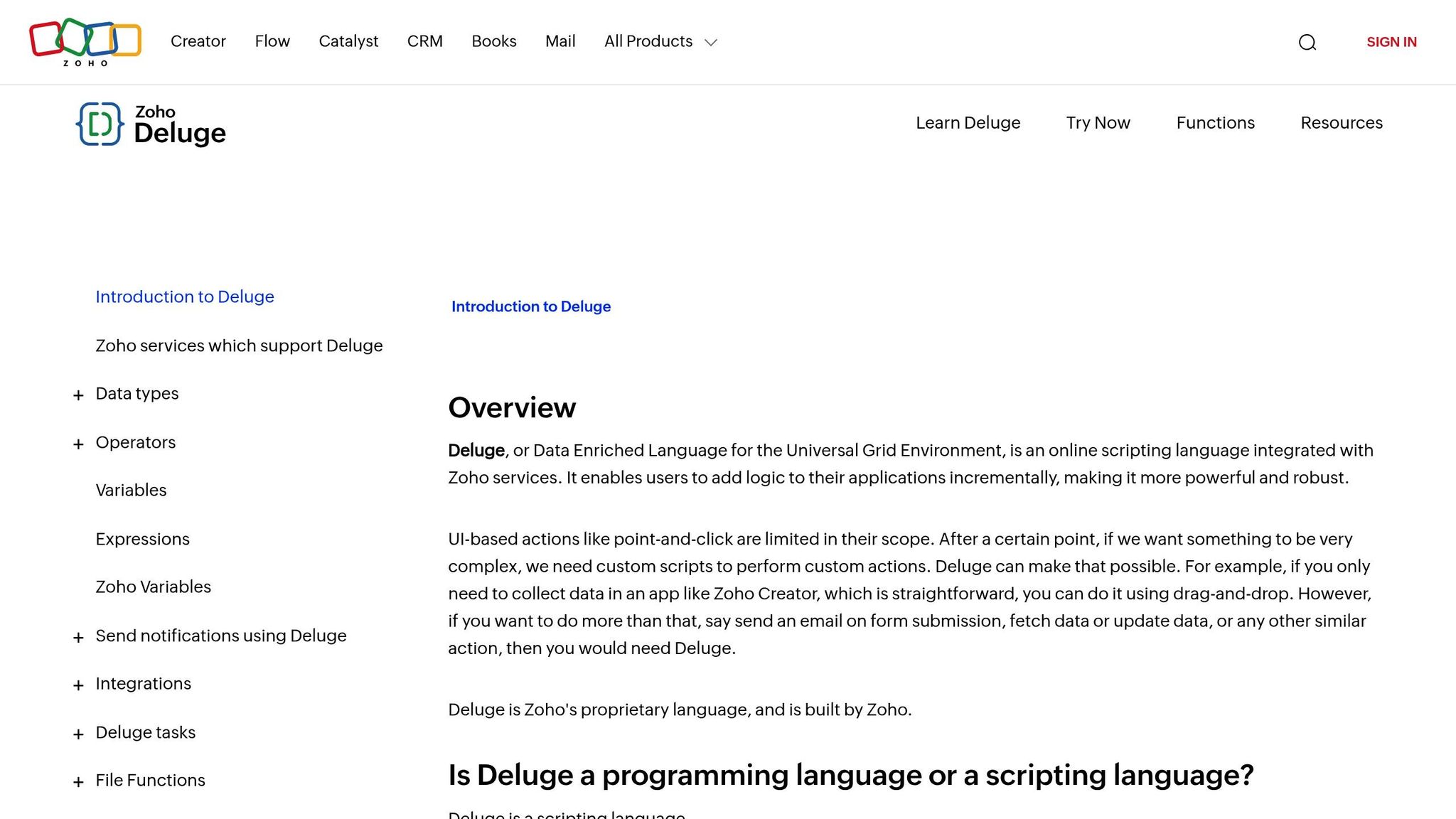
The Deluge editor within Zoho CRM is designed to make coding, testing, and deploying custom functions as smooth as possible. With this tool, you can write your function code, test it for errors, and deploy it – all in one place. Once deployed, your function is ready to integrate seamlessly into workflows, custom buttons, or automated processes based on the configuration you’ve chosen.
This streamlined approach ensures that your custom functions are not only easy to set up but also immediately effective in transforming and managing your data.
Core Deluge Scripting Methods for Data Transformation
Deluge’s built-in methods are the backbone of Zoho CRM workflows, enabling seamless data extraction, transformation, and loading.
Key Functions for Data Manipulation
Deluge provides several essential functions for handling CRM data effectively.
-
zoho.crm.getRecords: This is your go-to method for pulling data from any Zoho CRM module. It lets you retrieve records based on specific criteria while allowing you to specify fields, set limits, and sort results. This flexibility makes it easy to work with the data in your scripts. -
zoho.crm.updateRecord: Once you’ve processed your data, this function updates records in the CRM. It’s particularly useful when you need to apply bulk updates, like standardizing field formats across multiple entries. -
zoho.crm.searchRecords: If you need to find records based on detailed criteria, this function is your answer. UnlikegetRecords, it allows for more refined searches, making it invaluable when dealing with large datasets. -
zoho.crm.createRecord: When your workflow involves generating new records – like splitting data fields or creating related entries – this function handles the job seamlessly.
Together, these functions form a complete pipeline: extract data with getRecords or searchRecords, process it using Deluge logic, and save the results with updateRecord or createRecord. Adding loops and conditional logic takes this process to the next level.
Transforming Data with Loops and Conditions
Loops and conditional statements are the workhorses of data transformation in Deluge.
- For loops: Ideal for processing batches of records, a for loop iterates through each record individually. For example, you might retrieve a collection of contacts and loop through them to clean up phone numbers or update missing fields.
- Conditional statements: Using
if-elselogic, you can apply specific rules based on the data’s content. For instance, you might format phone numbers differently depending on whether they’re domestic or international or adjust date formats based on the source system. - While loops: These are helpful when dealing with paginated data or when processing needs to continue until a certain condition is met.
By combining loops and conditions, you can standardize inconsistent data, merge duplicates, and ensure consistency across related fields. For example, you can loop through leads and use conditional logic to unify company names, transforming variations like "Inc.", "Incorporated", and "Inc" into a standard "Inc."
Nested conditions within loops allow for even more complex decision-making. For instance, you could first check if a field has data, evaluate its format, and then apply the appropriate transformation based on multiple criteria.
Example Data Transformation Scenarios
Here are some practical examples of how Deluge scripting can tackle common data issues:
- Phone number standardization: Extract contact records, loop through phone fields, strip out non-numeric characters, and reformat them. For instance, raw data like "(555) 123-4567" or "+1-555-123-4567" can be transformed into a consistent format that aligns with your CRM’s standards.
- Date format standardization: Identify various date formats in text fields, convert them into proper date objects, and reformat them to match your organization’s requirements. This ensures workflows and reports function as expected.
- Address normalization: Standardize state abbreviations, ensure proper capitalization, format ZIP codes, and validate addresses against postal standards. A script can loop through address fields and apply checks to ensure consistency.
- Name field splitting and merging: Split full names into first and last name fields or combine separate name fields into a single display name. String manipulation functions make it easy to identify and rearrange name components.
- Currency and numeric formatting: Handle numeric values by applying currency formatting, ensuring consistent decimal places, or even performing currency conversions for international data.
These scenarios show how Deluge’s scripting capabilities, combined with logical structures like loops and conditions, can address complex data challenges efficiently – saving time and improving data quality across your CRM.
Advanced Data Transformation Workflows
Advanced Deluge workflows make it possible to seamlessly connect Zoho CRM with external platforms, automating data transformations and keeping everything synchronized in real time. Let’s break down how to streamline complex processes and set up real-time integrations.
Automating Complex Workflows
Using external event triggers like webhooks, you can automate how incoming data is processed in Zoho CRM. This not only eliminates the need for manual updates but also ensures that your data is always current and accurate.
Integrating Zoho CRM with Other Platforms
Deluge scripts act as the bridge between Zoho CRM and external systems. Webhooks enable real-time updates from third-party tools directly into CRM, while custom REST API connections allow you to both retrieve and update data dynamically. The result? A more efficient way to manage your data without unnecessary delays or errors.
Handling Bulk Data Updates and Errors
Managing large volumes of data can be tricky, especially when errors pop up. Advanced workflows in Deluge help you handle bulk updates smoothly while providing mechanisms to identify and resolve issues quickly, keeping your data clean and reliable.
sbb-itb-058cafb
Best Practices and Troubleshooting
Testing and Validating Transformations
To make sure your custom functions in Zoho CRM are working as intended, follow these steps:
- Use test data that matches the workflow criteria to trigger the function.
- Check if the function runs as expected and updates the data correctly in the target module.
- If something goes wrong, adjust the function code to fix the issue.
- Keep testing until the transformation produces the desired results.
For more precise troubleshooting, take advantage of debugging tools. The Deluge Script Builder’s Debug task, combined with the info function, lets you log key variables and track the execution process. This makes it easier to identify and resolve problems efficiently.
AorBorC Technologies‘ Expertise in Zoho CRM Customization
Custom Zoho CRM Solutions
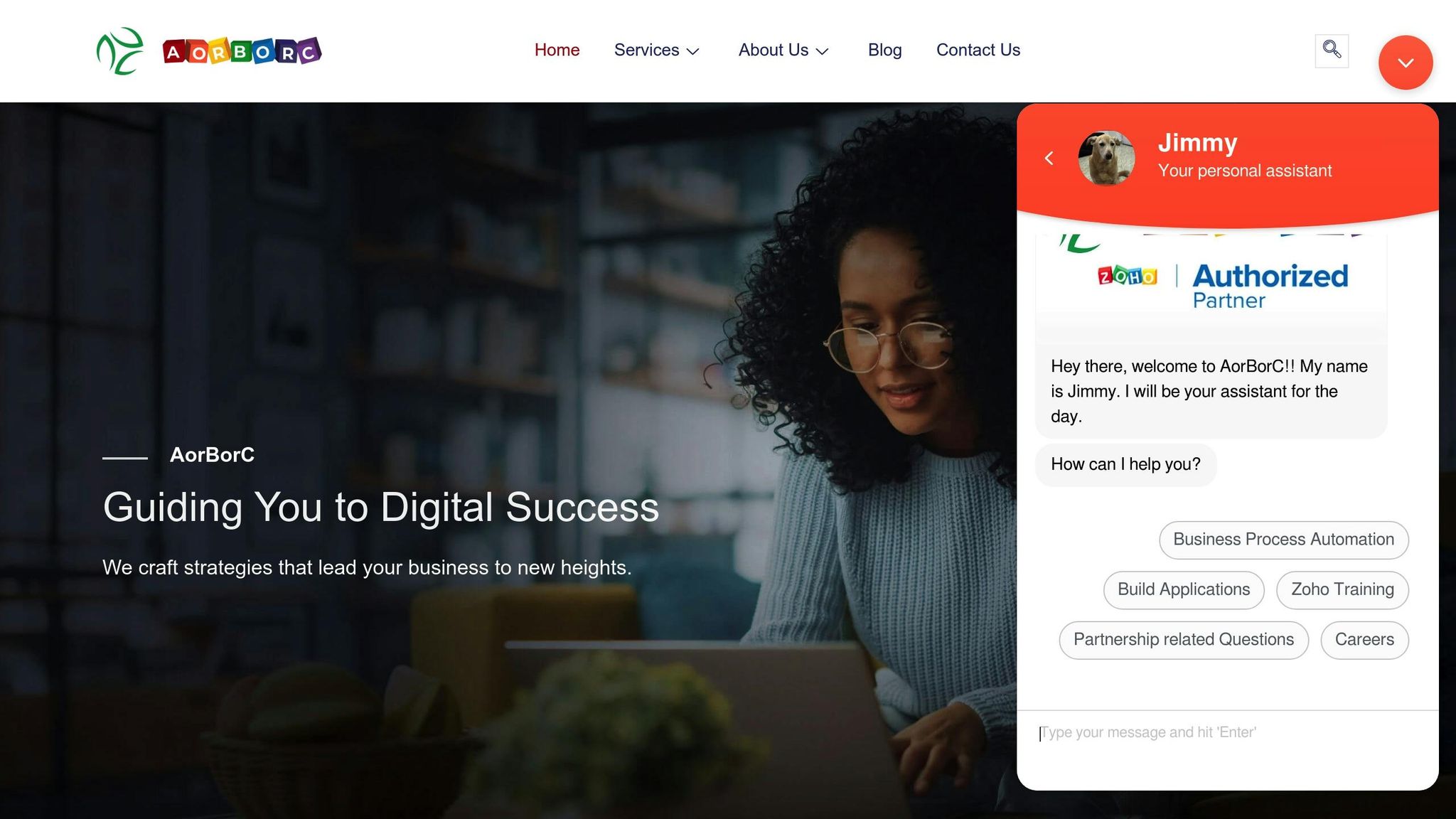
AorBorC Technologies specializes in tailoring Zoho CRM to tackle unique business challenges, leveraging advanced data transformation techniques. As an authorized Zoho partner, they deliver expert customization that goes far beyond standard templates, offering solutions designed to address specific needs.
Each Zoho CRM solution is built from the ground up, ensuring it aligns with the business’s individual goals. This approach is particularly effective for handling intricate data transformation workflows that out-of-the-box CRM setups simply can’t manage.
Their services include Zoho CRM App Development and Zoho Creator Mobile App development, enabling businesses to expand CRM capabilities through custom applications. By tapping into the power of Deluge scripting, these apps introduce advanced automation across various business modules and external systems.
With a client base ranging from startups to SMBs and enterprises, AorBorC Technologies demonstrates its ability to scale solutions. Whether it’s a simple data transformation script or a complex enterprise automation workflow, they understand how data needs shift as businesses grow and evolve.
Support for Advanced Data Transformation Needs
AorBorC Technologies excels in CRM Integration and Third-Party Integrations, ensuring seamless data flow between Zoho CRM and external platforms. Their team develops Deluge scripts to efficiently transform data, validate it, and manage errors during cross-platform exchanges.
Another key strength lies in Workflow Automation. They create advanced Deluge scripts to automate data transformation and routing based on specific business rules. This includes tasks like bulk data updates, managing complex conditional logic, and maintaining data integrity throughout the process.
Their technical expertise doesn’t stop at Zoho tools. They also offer Node.js App Development and PHP App Development, allowing them to build custom applications that work in harmony with Zoho CRM. This combination of skills enables the creation of robust solutions where Deluge scripts seamlessly interact with custom-built apps and databases.
For businesses with intricate data transformation needs, AorBorC Technologies provides advanced error handling, data validation, and transformation logic that surpass basic CRM capabilities. These features ensure reliable, ongoing support and a dependable partnership.
Partnership Benefits
AorBorC Technologies offers consistent and accessible support via phone and email, ensuring quick resolutions for any issues related to Deluge scripting or data transformation workflows. Their commitment to clear communication helps businesses maintain efficient operations.
Pricing is flexible and tailored to each business’s specific requirements. Instead of generic pricing tiers, businesses receive detailed cost estimates based on their unique data transformation needs.
As an authorized Zoho partner, AorBorC Technologies also assists businesses in connecting with other Zoho partners for specialized services. This ensures access to the full range of Zoho expertise when needs extend beyond CRM customization.
Their all-encompassing approach allows businesses to depend on a single partner for services like Zoho One implementation, ERP implementation, and ongoing CRM customization. This consistency simplifies the design and maintenance of data transformation workflows across various business systems, offering a streamlined and reliable experience.
Conclusion
Deluge scripting takes Zoho CRM beyond its basic functionality, turning it into a powerful tool for managing and transforming data. By enabling custom functions that adapt to specific business rules, it gives organizations precise control over how their information flows and operates.
The true strength of Deluge scripting lies in its ability to tackle challenges that standard CRM features can’t address. From handling bulk data updates and implementing complex conditional logic to enabling cross-platform integrations, Deluge offers the flexibility to create solutions that evolve alongside your business.
Some standout advantages include automated data validation, smooth system integrations, and consistent data accuracy across platforms. These features become essential as businesses grow and face more complicated data management needs.
Starting with simple functions is a smart way to build skills while delivering immediate results.
For businesses aiming to take their CRM customization to the next level, investing in Deluge scripting expertise can lead to better data accuracy, less manual work, and greater operational efficiency. Combining Zoho CRM’s built-in tools with tailored Deluge functions creates a solid framework for sustained growth.
The key to success is ensuring that Deluge solutions align with your specific data management goals. When done right, these functions simplify workflows and support informed decision-making. Deluge scripting empowers businesses to transform their CRM processes into a streamlined engine for growth and efficiency.
FAQs
How does Deluge scripting in Zoho CRM improve data accuracy and streamline workflows?
Deluge scripting in Zoho CRM takes the hassle out of managing data and workflows by automating essential tasks like data validation and record updates. This means fewer manual errors, better data consistency, and improved data integrity throughout your system.
With Deluge, you can handle advanced tasks like transforming data, converting leads, or updating related records effortlessly. By cutting down on repetitive work, your team can concentrate on more impactful projects, driving efficiency and getting more done in less time.
What permissions do I need to create and manage custom functions in Zoho CRM’s Developer Hub?
To build and manage custom functions in Zoho CRM’s Developer Hub, your user profile needs to have Manage Extensibility and Developer Permissions enabled. These permissions are essential for accessing the tools required to create and customize functions efficiently.
What types of data transformations can Deluge scripting handle in Zoho CRM?
Deluge scripting in Zoho CRM is a versatile tool that allows businesses to automate and customize their data workflows. With it, you can perform tasks like creating, updating, or deleting records, bulk updating multiple entries at once, and automating field value changes to keep your data consistent and accurate.
Beyond these functions, Deluge scripts can also fetch data from external sources, adjust or calculate field values based on specific conditions, and simplify repetitive processes. These features not only save time but also help improve data accuracy and streamline CRM operations, making daily tasks more efficient.