

Digital leadership is reshaping how businesses manage change. It’s about leveraging technology to innovate, align with business goals, and navigate challenges like remote work and digital transformation. Here’s what you need to know:
- Why it Matters: 93% of organizations are adopting digital-first strategies, making leadership in this space crucial for staying competitive.
- Key Skills: Leaders need technical expertise (AI, data analytics, cybersecurity) and emotional intelligence to manage rapid change and team dynamics.
- Building a Digital Workplace: Success hinges on integrating technology, fostering open communication, and training employees to use tools effectively.
- Change Management: Structured methods like the ADKAR model and clear communication help ensure digital transformations succeed.
- Using Tools: Platforms like Zoho streamline operations, improve decision-making, and enhance collaboration.
Leaders must combine technical knowledge with a people-focused approach to drive meaningful change in today’s digital-first world.
Key Skills for Digital Leaders
To lead in today’s rapidly evolving digital landscape, leaders need a mix of technical expertise and emotional intelligence. These abilities go beyond traditional management skills, requiring a firm grasp of technology, an understanding of human behavior, and a knack for navigating organizational complexities. The best digital leaders know how to blend technical know-how with emotional awareness, creating environments where both technology and people can excel.
Digital Knowledge and Technical Skills
For modern leaders, being digitally savvy isn’t optional – it’s a must. Digital literacy extends far beyond basic software skills. It involves a deeper understanding of how technology shapes business operations and strategies.
Some of the key technical areas leaders need to grasp include cloud computing, cybersecurity, data analytics, artificial intelligence (AI), and machine learning (ML). These technologies are at the heart of today’s business operations, and leaders who understand their potential can make smarter decisions about how to implement them and allocate resources.
Among these skills, data literacy stands out as crucial. Leaders must know how to interpret and analyze the vast amounts of data generated by digital systems. This ability helps them spot trends, make informed decisions, and clearly communicate insights to their teams.
The range of necessary technical knowledge is constantly growing. Emerging technologies like virtual reality (VR), augmented reality (AR), 3D modeling, and blockchain are becoming increasingly relevant for driving innovation.
However, there’s a challenge: the skills gap. Many workers lack the digital skills needed to keep pace with technological advancements. This gap underscores the importance of investing in training and development programs. Leaders need to ensure their teams are equipped to use new tools effectively. Partnering with industry experts or leveraging online learning platforms can help bridge this gap. Ultimately, digital transformation is about more than just adopting new tools – it’s about building the capability to use them well.
But technical skills alone aren’t enough. Leaders also need the ability to adapt and recover quickly in an ever-changing environment.
Flexibility and Resilience
The fast pace of technological change requires leaders who can pivot quickly and recover from setbacks. Flexibility and resilience aren’t just nice traits to have – they’re essential for managing the complexities of digital transformation.
Quick decision-making is critical when markets shift or new technologies emerge. Leaders must be comfortable making choices with limited information and adjusting their approach as new data becomes available. This marks a shift from traditional long-term planning to a more agile mindset.
Resilience is equally important, especially in the face of challenges like cyber threats or sudden market disruptions. With cybercrime predicted to cost the world $10.5 trillion annually by 2025, leaders must build both personal and organizational resilience to handle these risks.
"Resilience is the process of transforming failures into strengths and opportunities for growth, enabling leaders to foster innovation and drive progress within their organizations for long-term success." – Dr. Sabine Charles, Leadership Expert
A leader’s emotional intelligence (EQ) plays a major role in building resilience. Leaders who can manage their emotions and understand the feelings of others are better equipped to handle the stress and uncertainty that come with digital transformation. This is especially vital when leading remote or hybrid teams through complex changes.
Creating a resilient organization also requires balancing innovation with stability. Leaders must design systems that can adapt to change while keeping core operations intact. This means investing in technology, processes, and people that support both current needs and future growth.
The numbers back this up: 78% of executives agree that digital skills are critical for leadership success in the future. Leaders who embrace flexibility and resilience position their organizations to thrive in a digital-first world.
"In this fast-paced digital age, empathetic leadership catalyzes innovation and resilience… By prioritizing work-life balance, cultivating psychological safety and promoting continuous learning, we create an environment where innovation flourishes and our teams thrive in the face of digital disruption." – Tyler Bray, CEO, The Trailer Parts Outlet
This resilience lays the foundation for a leadership style built on transparency and collaboration, both of which are vital for digital success.
Transparent and Team-Based Leadership
Transparency and collaboration are essential for navigating the challenges of digital transformation. Traditional top-down leadership approaches often fail in digital environments, where agility and teamwork are crucial.
Transparency breaks down barriers and empowers employees to take ownership of decisions. When team members understand not just the “what” but also the “why” behind initiatives, they can make decisions that align with the organization’s goals. This not only boosts efficiency but also increases employee engagement. Research shows employees in transparent organizations are ten times more likely to advocate for their workplace. Deloitte reports that 74% of leaders view trust and transparency as critical to the relationship between workers and their organizations.
"Leadership transparency will be key to organizational success in 2025… Employees demand even more openness, particularly regarding critical decisions affecting their futures." – Kara Dennison, Contributor, Forbes
Human factors are a major determinant of digital transformation success. McKinsey found that around 70% of digital transformation efforts fail, often due to employee resistance and poor change management. Leaders who prioritize transparency can tackle these issues by treating resistance as valuable feedback rather than opposition.
Organizations that embrace this approach often see better outcomes. A 2022 MIT Sloan Management Review study revealed that companies viewing resistance as constructive feedback were 2.6 times more likely to achieve their transformation goals. This requires leaders to actively listen to concerns and adjust their strategies based on input.
Effective communication is key. Leaders need to establish feedback channels that work in all directions – up, down, and across the organization. Regular check-ins, anonymous surveys, and celebrating small wins can help maintain momentum. Balancing technology metrics with human-focused measures like employee satisfaction ensures a well-rounded approach.
Unfortunately, many organizations fall short. LeadershipIQ reports that only 23% of employees feel their leaders handle workplace problems constructively, and just 15% believe their organizations are open about challenges. By prioritizing transparency, digital leaders can set themselves apart and build stronger, more cohesive teams.
"The greatest irony of digital transformation is that its success depends on deeply human factors: trust, communication, patience, and empathy." – LeadersToolbelt.com
Creating a culture of psychological safety is also vital. When employees feel safe to share ideas, voice concerns, and even fail, it fosters the kind of innovative thinking necessary for successful digital transformation. Leaders who encourage this openness lay the groundwork for lasting success in a digital world.
Methods for Leading Digital Change
Leadership skills are just the beginning when it comes to driving digital transformation. What truly makes a difference is using practical methods that combine technical know-how with a focus on people. Successful digital change requires addressing both the technology and the human side of transformation.
Building a Clear Vision and Leading Change
Think of digital transformation as a journey – without a clear vision, it’s like setting off without a map. Leaders need to create a compelling story that explains not only what changes are happening but also why they matter. This vision serves as the cornerstone of all transformation efforts.
Starting with the "why" helps inspire employees to get behind the change. When people understand the purpose behind digital initiatives, they’re much more likely to support and embrace them. As change management expert David McGeown puts it:
"Start with ‘WHY’. Communicate a clear vision for change – when people understand the purpose and see leadership committed to it, they’re far more likely to get on board."
A well-defined roadmap brings that vision to life. It should include specific timelines, measurable goals, and alignment with broader business priorities. This means evaluating current technology, identifying key players across departments, and securing buy-in from decision-makers.
Nike’s digital transformation offers a great example. By launching apps that connected consumers to both online and in-store experiences, they showed how a clear vision can lead to meaningful results.
Another critical step is building a network of change champions. These are employees who not only believe in the project but also help guide their peers through the transition. McGeown emphasizes their importance:
"Champions not just cheerleaders: Identify change champions at all levels. Empower employees who believe in the project to lead by example and help their peers through the transition."
Regular communication – through town halls, team meetings, and digital platforms – keeps everyone aligned and engaged. These champions also play a key role in celebrating milestones, which helps sustain morale and shows employees that their efforts are making a difference.
This strong foundation paves the way for skill development and structured change management.
Building Digital Skills Through Training
Even the most advanced technology won’t deliver results without proper training. At its core, digital transformation is about people, and investing in their development is what turns new tools into real solutions.
Comprehensive training programs should go beyond basic tutorials. Employees need to see how new technologies can improve their daily tasks and contribute to larger business goals. Selin Bakaçhan, CHRO at META-NTT DATA, highlights this:
"Leaders must prioritize training and development, ensuring employees at all levels understand AI and how it can enhance their daily work."
The best training is personalized and fits seamlessly into daily workflows. Instead of long, formal sessions, companies are turning to microlearning, tooltips, and on-demand resources that provide help exactly when it’s needed. This approach minimizes disruption and builds confidence with new tools.
Creating a safe space for learning is equally important. Employees need to feel comfortable experimenting with new technologies without fear of failure. When mistakes are treated as opportunities to learn, it fosters the kind of mindset that’s essential for long-term success.
A great example comes from Texas A&M University System. While modernizing their payroll system, they used a structured approach to training and communication. By building a support network of sponsors and change agents, they ensured employees were ready for the transition with minimal disruption.
Training shouldn’t be a one-time event. As technologies evolve, ongoing development ensures teams stay up-to-date and capable of using new features effectively. Organizations that treat training as an investment rather than an expense often see higher adoption rates and better results.
Measuring the success of training programs is also crucial. Metrics like user adoption rates, productivity improvements, and employee confidence surveys can reveal what’s working and what needs adjustment. When training directly addresses workplace challenges and delivers measurable benefits, employees are more likely to stay engaged.
Using Structured Change Management Methods
Statistics show that 70% of digital transformation efforts fail to meet their goals. However, organizations that use structured change management methods significantly increase their chances of success. In fact, projects with effective change management are seven times more likely to succeed. Despite this, fewer than 70% of organizations use such methodologies.
One proven framework is the Prosci Methodology, which focuses on managing the people side of change. It includes three key components: the PCT Model, ADKAR Model, and the 3-Phase Process. Together, these elements address everything from individual adoption to organizational alignment.
The ADKAR Model breaks down individual change into five elements: Awareness, Desire, Knowledge, Ability, and Reinforcement. This approach recognizes that lasting change happens one person at a time. Here’s how it works:
- Awareness: Help employees understand why change is necessary and what’s at stake if the organization doesn’t adapt.
- Desire: Motivate employees by highlighting both personal and organizational benefits.
- Knowledge: Provide the skills and information needed to make the change.
- Ability: Ensure employees can apply what they’ve learned in real-world situations.
- Reinforcement: Sustain change through ongoing support, recognition, and feedback.
On an organizational level, the Prosci 3-Phase Process ensures a structured approach through three stages: Prepare Approach, Manage Change, and Sustain Outcomes. This framework helps leaders address both technical implementation and the human side of transformation.
For example, a municipal utility company undergoing a $200+ million ERP transformation partnered with Prosci Advisory Services to establish a Change Management Office (CMO). This office focused on project support, capability building, and change management. Within six months, the CMO gained trust across the organization, ensuring smoother adoption and long-term success.
Resistance to change is a common challenge, but it doesn’t have to be a roadblock. Effective leaders treat resistance as valuable feedback rather than opposition. In fact, companies that view resistance constructively are 2.6 times more likely to achieve their goals.
Celebrating progress is another essential element. As McGeown notes:
"Celebrate the wins (no matter how small). Transformation is hard work – recognizing progress keeps the momentum and morale high. People need to see that their efforts are making a difference."
Ultimately, the success of digital transformation lies in balancing technical execution with a strong focus on people. Leaders who prioritize both aspects create the conditions for lasting and meaningful change.
Using Digital Tools for Team Coordination
The rise of digital transformation is reshaping how teams collaborate. The right digital tools can close communication gaps, simplify workflows, and provide the clarity needed for smooth organizational transitions. With 59% of IT projects now involving distributed teams and 73% of companies projected to operate remotely by 2028, effective digital coordination has shifted from being optional to essential.
Companies that adopt digital collaboration tools often see tangible results. On average, these organizations experience a 27% boost in productivity. IT departments using such tools complete tasks up to 68% faster compared to teams without access to them. Clearly, leveraging the right tools can make a measurable difference.
Communication and Collaboration Tools
Selecting the right mix of communication and collaboration tools is the cornerstone of effective team coordination. These tools must support both real-time interactions and asynchronous work, accommodating varying time zones and schedules.
- Project management software acts as a command center, organizing tasks, deadlines, and resources. Real-time updates keep everyone aligned on priorities.
- Video conferencing platforms have evolved into multifunctional spaces, integrating features like screen sharing, document collaboration, and recording. Clear guidelines on when to use video calls versus other channels can make these tools even more effective.
- Messaging tools bridge the gap between formal emails and informal chats, fostering team connections. However, setting boundaries on response times and usage is key to preventing overwhelm.
Karina Berner, Creative Production Specialist at Sartorius, highlights the importance of choosing the right tools:
"Filestage is one of the only tools that lets our marketing team and agency partners collaborate in one platform. Our internal team sets up the approval workflow, then the agency can upload their content directly to kickstart the review process. This makes sure everything goes through the necessary product managers and technical experts before it goes out the door, no matter whether it was created in-house or externally."
To maximize efficiency, integrating tools across platforms is vital. Seamless connections between project management software, communication tools, and document-sharing systems eliminate bottlenecks and reduce time wasted switching between apps.
Security is another critical factor. In 2022, IBM reported that the average cost of a data breach in the U.S. reached $9.44 million. Collaboration tools now include safeguards like two-factor authentication and advanced encryption, offering better protection for sensitive data.
Making Decisions Based on Data
Digital tools generate valuable insights into team performance, project progress, and overall efficiency. Leaders who harness this data can make more informed decisions and drive successful initiatives.
- Data-driven decision-making replaces guesswork with analytics, enabling faster, more profitable, and customer-focused outcomes. Companies that use data effectively are five times quicker in decision-making and significantly more likely to retain and attract customers.
- Business intelligence (BI) tools simplify raw data into actionable insights through user-friendly dashboards and reports. These visual tools make it easier to track key metrics, spot trends, and address issues before they escalate. Given that the human brain processes images 60,000 times faster than text, visual dashboards are particularly effective for quick decision-making.
Robert Sur, Founder & CEO at Delegate, emphasizes the importance of relying on data:
"Trusting data over gut feelings means embracing a mindset where every hypothesis and strategy is tested and validated through data, ensuring decisions are not just guesses but informed choices."
Making data accessible to employees at all levels empowers them to make informed decisions in their daily tasks, fostering a sense of ownership. Analytics tools can provide up to 13 times their cost in value, making them indispensable for any digital transformation effort.
Creating a Feedback-Focused Digital Environment
Feedback mechanisms are essential for maintaining momentum during organizational changes. Digital tools make it easier to gather, analyze, and act on feedback across all levels of a company.
- Clear feedback channels, such as anonymous surveys, discussion forums, and regular check-ins, help surface issues early and keep employees engaged. The key is to integrate feedback collection into daily workflows, making it a natural part of operations.
- Asynchronous feedback options, like email surveys and collaborative documents, allow team members to provide thoughtful input on their own time, increasing participation and quality of responses.
Effective communication has a direct impact on retention, with companies that communicate well experiencing 50% lower employee turnover. Teams that communicate effectively are also 4.5 times more likely to retain top talent – a critical factor during periods of change.
The "2 Minute Wrap-Up" technique is a practical way to gather immediate feedback after meetings. By quickly reviewing key points and confirming next steps, teams can avoid miscommunication and ensure accountability.
As teams become more distributed, cross-cultural training becomes increasingly important. Understanding diverse communication styles fosters an environment where everyone feels comfortable sharing honest feedback.
Regularly monitoring collaboration metrics – like time saved, productivity improvements, and satisfaction scores – helps refine coordination efforts. This ensures that digital tools enhance, rather than complicate, team workflows.
Liberty Mutual provides a strong example of this approach. As their Senior Vice President and CIO for the Global Specialty business unit explains:
"We wanted to create global productivity teams that could collaborate and leverage our scale in a digital manner."
sbb-itb-058cafb
Using Zoho Solutions for Digital Transformation
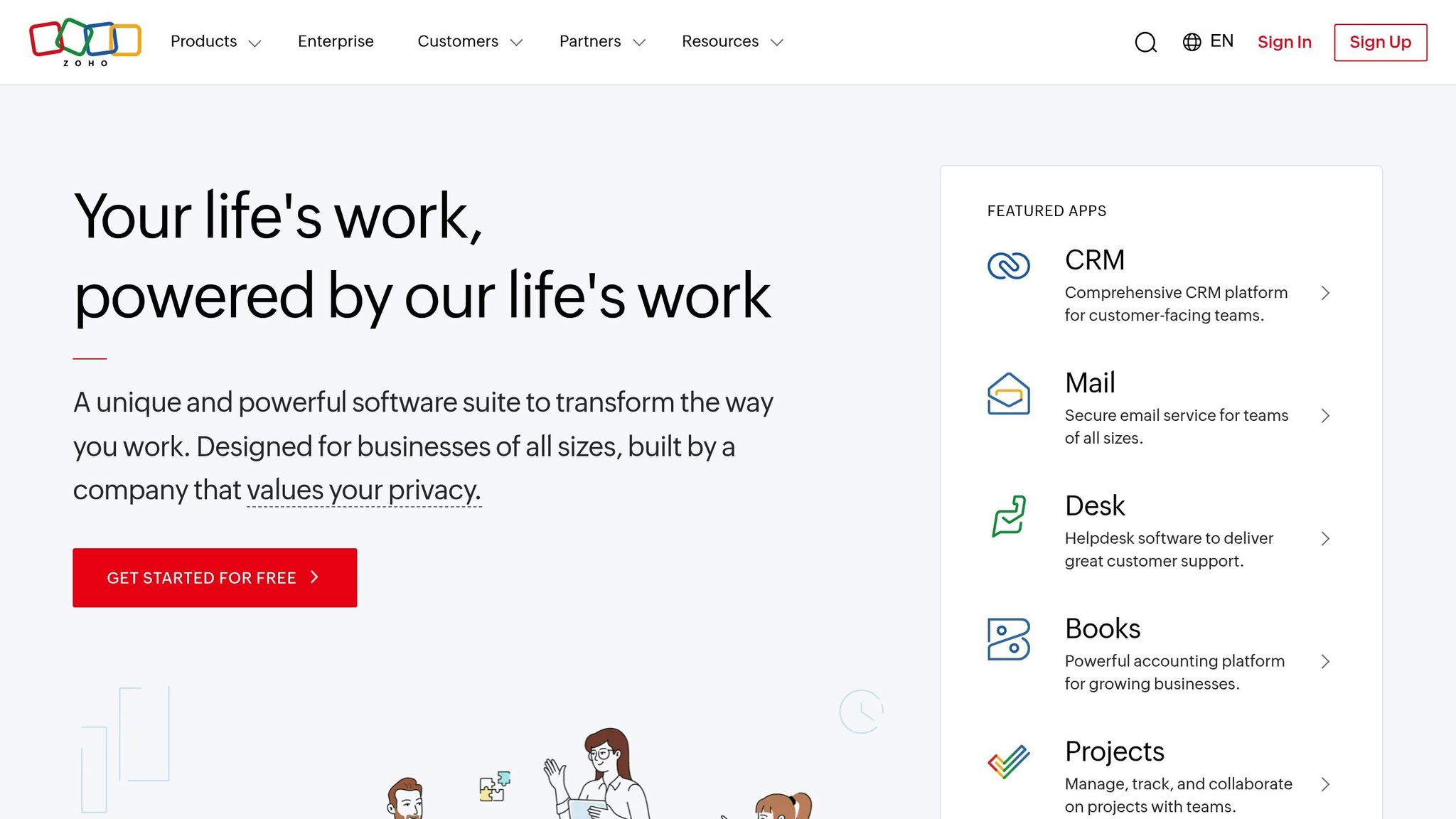
Digital transformation requires a cohesive platform that simplifies operations and equips leaders to drive impactful changes. Zoho’s suite of tools lays the groundwork for this shift, offering integrated solutions that streamline workflows, improve data visibility, and help leaders steer their organizations effectively. A key starting point in this journey is tailoring your CRM for optimal performance.
The global CRM market is projected to hit $114.4 billion by 2027, growing annually at a rate of 13.9%. This trend underscores the growing importance of customer relationship management and business process automation in achieving successful digital transformation.
Customizing Zoho CRM for Better Efficiency
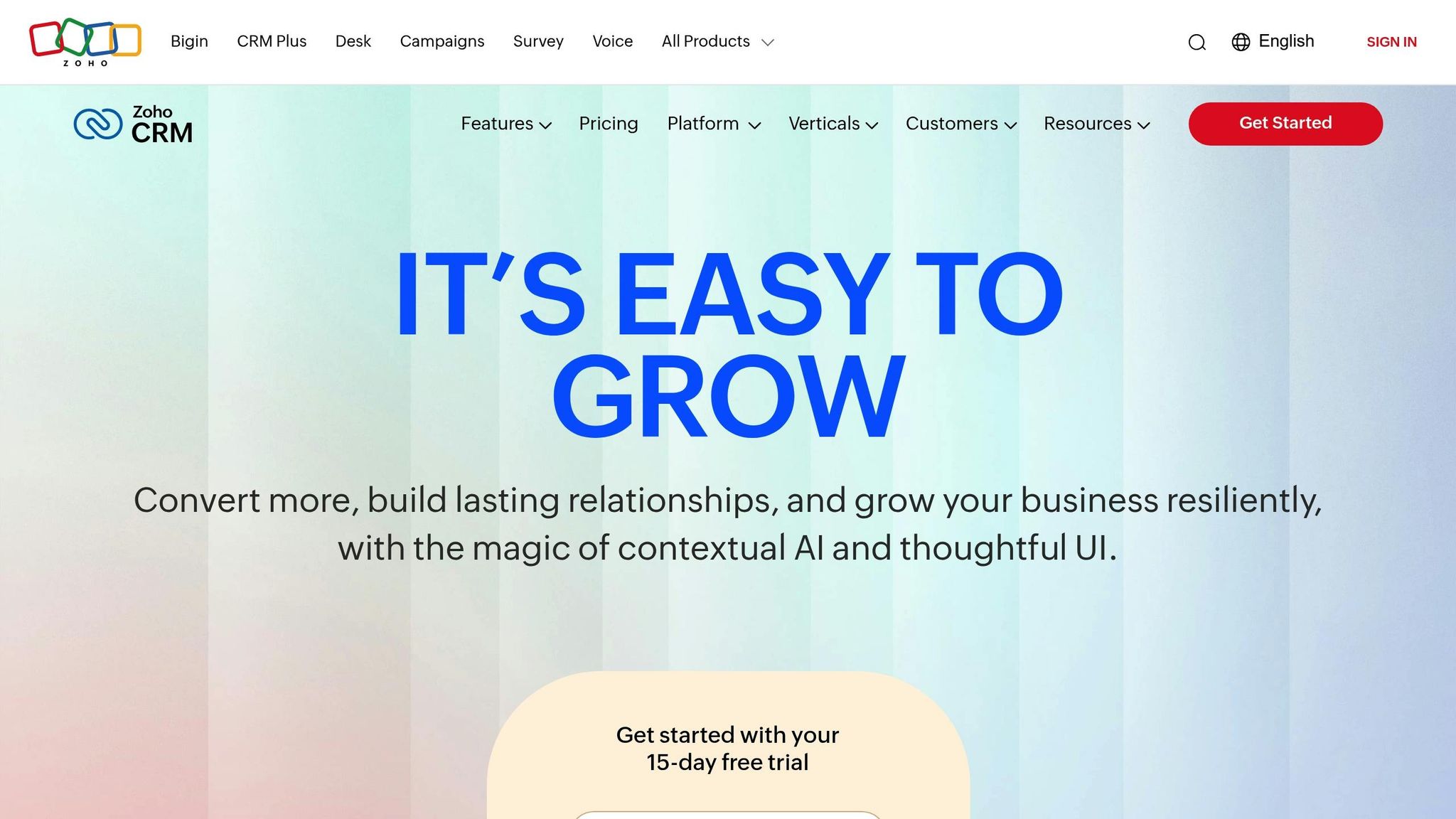
Customizing Zoho CRM plays a critical role in digital transformation by automating repetitive tasks and aligning workflows with specific business needs. Automation through CRM has been shown to increase productivity by 30% and revenue by 25%.
With workflow automation, businesses can eliminate manual bottlenecks using custom sales pipelines, automated follow-ups, and personalized communication strategies. Custom modules allow for the storage of unique operational data, while advanced reporting tools provide leaders with real-time insights to make informed decisions. For instance, companies utilizing CRM analytics have seen a 23% reduction in sales and marketing costs and a 300% boost in lead conversion rates. Additionally, custom user roles and permissions ensure that team members access only the information they need, maintaining security – a critical factor since 24% of CRM projects fail due to poor user adoption.
Implementing ERP and Zoho One for Complete Business Integration
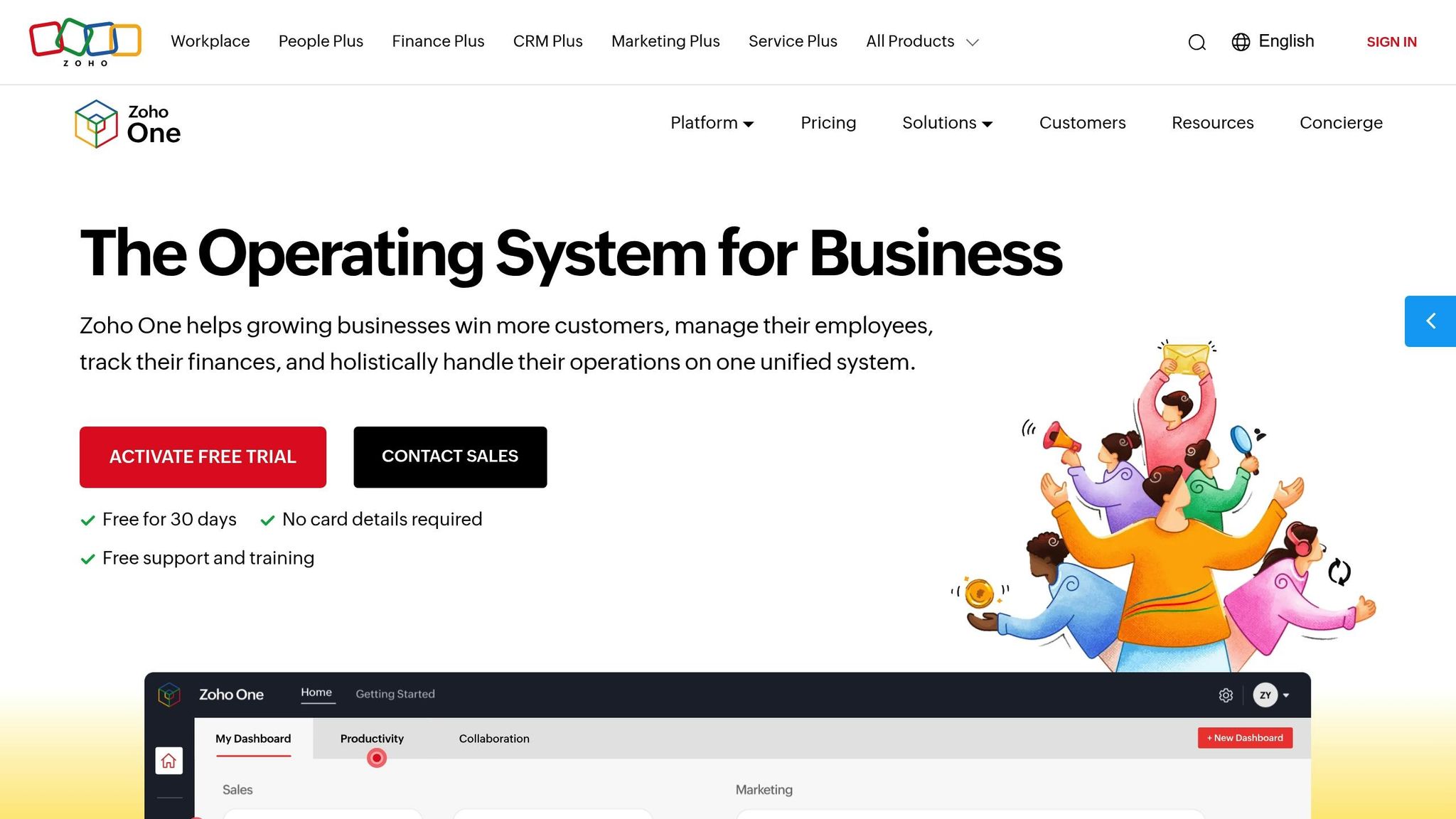
Zoho One takes digital transformation beyond traditional ERP systems by integrating customer-facing operations and team collaboration tools into a single platform. This unified approach eliminates fragmentation, ensuring seamless data flow across all functions.
To begin, define clear business goals and map current processes to identify areas for improvement. Zoho’s API capabilities make it easy to connect with other systems, while Zoho Flow enables teams to automate workflows without needing coding expertise.
A phased implementation strategy works best – start with the most critical integrations, then move to less urgent ones. Rigorous testing and validation ensure the system functions as planned before full deployment. Comprehensive training helps employees adapt to the new tools, and regular system reviews ensure everything stays aligned with business objectives. Once integrated, ongoing expert support ensures your systems continue to meet evolving needs.
Working with AorBorC Technologies
AorBorC Technologies brings over 13 years of experience in developing web-based applications and automation scripts, making them a trusted partner for organizations adopting Zoho solutions. Their expertise spans Zoho CRM customization, Zoho Creator application development, and Zoho One implementation, providing the technical know-how needed for successful transformation.
Rather than offering one-size-fits-all solutions, AorBorC prioritizes customization to address each business’s unique needs. Their structured process includes consultation, planning, design, development, testing, launch, and ongoing support, ensuring a comprehensive approach to digital transformation.
This partnership model is especially valuable during periods of organizational change, offering reliable technical support while enabling leaders to remain in control of their transformation strategy. AorBorC’s focus on measurable outcomes helps leaders demonstrate the value of digital initiatives to stakeholders. With satisfied clients in over 20 countries, their international experience brings insights into diverse business landscapes and change management challenges.
AorBorC also offers ongoing support and continuous improvement services, ensuring that Zoho solutions evolve with your business. Regular updates and system optimizations help organizations maximize their Zoho investments as their needs change. Throughout the process, their emphasis on transparency and collaboration keeps stakeholders informed and engaged, making the transition smoother and more effective.
Conclusion: Main Points for Digital Leadership
Digital leadership thrives at the intersection of technical know-how and a people-centered approach, creating the foundation for meaningful change within organizations. The most impactful digital leaders excel in three critical areas: strategic thinking, open communication, and data-informed decision-making. As McKinsey highlights, "Leaders in AI-first organizations also must be change agents", underscoring the dual responsibility of modern leadership – shaping strategy while driving implementation.
With less than 30% of digital transformation efforts achieving success, effective change management becomes indispensable. Projects with robust change management practices are seven times more likely to succeed. One of the most critical steps leaders can take is developing digital skills across their teams. With an estimated 40% of the workforce needing reskilling within three years, leaders must prioritize not just technical training but also cultivate a culture of innovation, teamwork, and ongoing learning.
On the technology front, tools like Zoho offer a glimpse into how integrated platforms can streamline operations and improve visibility. Zoho’s suite of solutions addresses operational bottlenecks, enabling leaders to make better decisions through unified data. For instance, businesses using Zoho Flow have cut manual tasks by 50%, while companies leveraging integrated CRM and analytics tools report productivity improvements exceeding 25%.
But technology alone isn’t enough. Transparent communication forms the backbone of any successful transformation. As Carmine Gallo from Harvard Business Review puts it, "You can have the greatest idea in the world, but if you can’t persuade anyone else to follow your vision, your influence and impact will be greatly diminished." Digital leaders rely on communication to build trust, align teams, and guide their organizations through change.
The way forward lies in adopting a digital-first mindset while staying grounded in the human aspects of leadership. Organizations that succeed in digital transformation unite technological tools with strong change management, comprehensive training, and leaders who can align technology with business goals. With 80% of organizations planning to accelerate their digital efforts, those who master this balance will achieve the most impactful results. True digital leadership blends technology with a people-first approach to create lasting progress.
FAQs
What key skills do leaders need to effectively drive digital transformation in their organization?
To steer digital transformation effectively, leaders need to develop a set of key skills that align with the demands of a fast-changing landscape:
- Agility: The ability to pivot quickly and adjust strategies as technologies shift and market needs evolve. Staying flexible is crucial in a world where change is constant.
- Vision and customer focus: Defining a clear path forward while keeping the customer’s needs and expectations at the heart of every decision.
- Collaboration: Building cohesive teams and promoting open communication across departments to ensure everyone works toward shared goals.
- Influence and stakeholder management: Securing support from stakeholders and fostering alignment to drive decisions forward.
- Technical adaptability: Staying informed about new technologies and finding practical ways to use them to innovate and improve business operations.
These skills equip leaders to navigate change, unite their teams, and create an environment where innovation and growth thrive.
How can organizations close the digital skills gap to ensure employees successfully adopt new technologies?
To bridge the digital skills gap, organizations should start by pinpointing the exact areas where their teams need support. Regular skill assessments can help identify these gaps. Once understood, the next step is to implement targeted training initiatives like workshops, online courses, or interactive, hands-on sessions to address those specific needs.
Creating an environment that values ongoing learning is just as important. This could involve mentorship programs, encouraging teamwork, and nurturing a mindset focused on growth. By empowering employees with both the necessary skills and a positive approach to learning, businesses can not only embrace new technologies more effectively but also set the stage for successful digital transformation.
Why are transparency and collaboration critical for digital leaders, and how can they encourage these values within their teams?
Transparency and teamwork are essential for digital leaders aiming to build trust, enhance team involvement, and create an environment of openness. These traits enable teams to work more effectively together and tackle challenges efficiently – especially during periods of organizational change.
Leaders can promote transparency and collaboration by keeping communication straightforward and open, actively listening to team input, and demonstrating accountability through their actions. When leaders cultivate a space where everyone feels respected and heard, they pave the way for stronger alignment and fresh ideas within their organizations.