
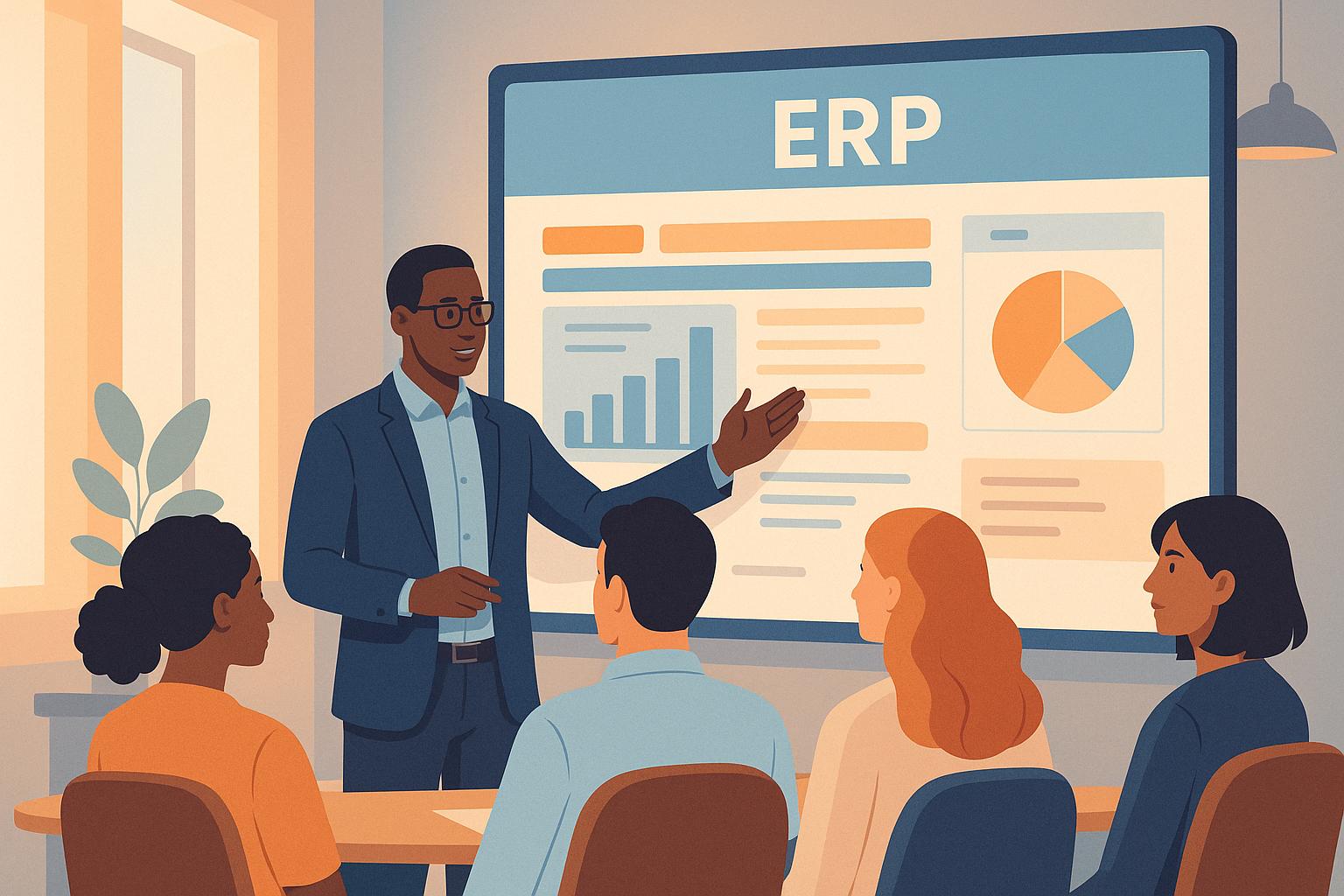
ERP systems succeed when employees know how to use them effectively. That’s where Train-the-Trainer (TTT) programs come in. Instead of relying solely on external consultants, TTT empowers selected employees to become in-house trainers. These trainers gain deep ERP knowledge and teach their peers, ensuring long-term system success.
Key Benefits of TTT:
- Cost Savings: Internal trainers reduce reliance on expensive external consultants.
- Continuous Support: Trainers remain available for ongoing help after the system goes live.
- Tailored Training: Trainers understand company workflows and deliver role-specific guidance.
- Scalability: Internal trainers can handle large teams, different shifts, and locations.
Common ERP Challenges TTT Solves:
- User Resistance: Trainers address concerns and help employees embrace the system.
- Skill Gaps: Tailored training builds confidence and reduces frustration.
- Knowledge Retention: Internal trainers ensure knowledge isn’t lost when consultants leave.
- Training Logistics: Flexible schedules and department-specific sessions improve coordination.
TTT programs are a practical way to ensure ERP adoption. With proper planning, skilled trainers, and tailored content, organizations can build a knowledgeable workforce ready to maximize ERP benefits.
Planning a Train-the-Trainer Program
A well-structured Train-the-Trainer (TTT) program starts with clear goals and the right team of internal trainers. The planning phase sets the foundation by identifying training leads, outlining necessary content, and ensuring alignment with your ERP implementation objectives.
Selecting Stakeholders and Trainers
The success of your TTT program depends heavily on choosing the right trainers. These individuals should combine ERP expertise with strong communication skills to effectively guide others.
Begin by identifying core users and power users – those who have demonstrated a strong understanding of both your business processes and the ERP system. These individuals often stand out during the implementation phase, actively helping colleagues troubleshoot and showing enthusiasm for the new system. Members of the ERP project team are also excellent candidates, as they’ve gained valuable hands-on experience.
Subject matter experts (SMEs) from different departments should be high on your list. Their deep knowledge of specific workflows and how the ERP system impacts their area of the business makes them valuable resources. However, remember that technical expertise alone doesn’t make someone a great trainer.
When evaluating potential trainers, focus on the following:
- Business process knowledge: Trainers should have a solid grasp of your organization’s workflows and be able to explain not just how tasks are done in the ERP system, but why they matter to the business.
- ERP proficiency: Look for individuals who are confident navigating the system and can troubleshoot common issues.
- Communication skills: Strong trainers can break down complex topics into simple, relatable terms and excel at presenting information clearly. Observe how candidates interact with colleagues in meetings or informal settings – natural teachers often stand out in these moments.
- Enthusiasm and willingness: The best trainers are eager to help others succeed. Choose individuals who are committed, excited, and approachable. Reluctant participants, no matter how skilled, are unlikely to deliver effective training.
Creating Custom Training Content
Once you’ve selected your trainers, the next step is to design training materials tailored to your organization’s specific needs. Generic resources won’t cut it – your content must reflect real-world processes and challenges.
Start by assessing user roles and skill levels across your organization. Different teams will interact with the ERP system in unique ways. For instance, finance teams might need in-depth training on reporting tools, while warehouse staff may focus on inventory management.
Develop role-specific training paths to ensure relevance. A sales representative doesn’t need to learn about manufacturing workflows but should master customer relationship management and order processing features. This targeted approach saves time and makes the training more effective.
Incorporate realistic scenarios and examples into your materials. Use actual products, customers (while respecting privacy), and workflows to make the training immediately applicable to employees’ daily tasks.
Structure your materials to progress from basic to advanced features. New users need to grasp the fundamentals before diving into more complex functionalities. This allows trainers to adjust the pace based on their audience’s comfort level.
Offer multiple learning formats to cater to different preferences. Some employees learn best through hands-on practice, while others prefer written guides or video tutorials. A mix of interactive exercises, quick reference sheets, step-by-step guides, and video demonstrations ensures everyone has access to resources that suit their learning style.
Aligning TTT with Business Goals
To maximize the impact of your TTT program, align it closely with your ERP objectives and broader business strategies. This ensures that the training not only improves user adoption but also contributes to overall system effectiveness.
Tie training objectives to measurable business outcomes. For example, if the ERP implementation aims to reduce order processing time by 30%, your training should emphasize workflows and features that support this goal. Trainers need to understand how proper system use directly affects these outcomes.
Integrate training with change management efforts. ERP implementations often bring significant changes, and internal trainers play a key role in addressing resistance and concerns. Equip them with talking points to explain why the changes are happening and how they benefit both the organization and individual employees.
Define success metrics that connect training effectiveness to business performance. Track user adoption rates, error reduction, and time-to-competency alongside traditional metrics like attendance and satisfaction scores. This data helps demonstrate the value of your TTT program.
Coordinate training with project milestones. Trainers should be ready to support users during critical phases like system testing, data migration, and go-live. Careful scheduling ensures trainers have the time they need to prepare before these key moments.
Budget for long-term success. While TTT programs can reduce training costs over time, they require an initial investment in trainer development, content creation, and ongoing support. Allocate resources for trainers to refine their skills, update materials, and stay informed as the system evolves.
Running Train-the-Trainer Sessions
With your trainers selected and your custom content ready, it’s time to dive into the sessions. The goal here is to transform your ERP users into capable trainers who are ready to teach others. To do this effectively, you’ll need to create a dynamic learning environment that mimics the real-world situations your trainers will encounter with end-users.
Mixed Learning Methods
A great Train-the-Trainer (TTT) program uses a mix of learning techniques to cater to different styles and improve retention. Since your trainers will work with a variety of learners, they should experience diverse approaches themselves.
Instructor-led sessions are the backbone of any TTT program. These in-person sessions let trainers ask questions, practice their teaching skills, and get immediate feedback. Keep these sessions short and focused – 2-3 hours is ideal to maintain energy and allow time for reflection.
During these sessions, emphasize adult learning principles. Adults learn best when they see how the material applies to their roles. Show how each ERP feature connects to business goals and productivity. Help trainers explain not just the "how" of a process but also the "why" behind it.
Online modules and in-app guidance tools are perfect for foundational concepts. Trainers can review these materials before moving on to hands-on training. Many ERP systems come with built-in tools that can be tailored to fit your workflows, making them a great resource for on-demand learning.
Peer learning sessions are another effective strategy. Pair experienced ERP users with those who are newer to the system. This not only speeds up learning but also helps trainers develop coaching skills in a supportive setting.
Video demonstrations are invaluable as reference materials. Record key processes and tricky scenarios so trainers can revisit them later or share them with end-users who need extra help.
Practical Training and Real Scenarios
Once you’ve introduced the learning methods, it’s time to focus on practical, hands-on training. This step is critical for building confidence and ensuring trainers are ready for real-world challenges.
Set up a realistic training environment that mirrors your actual ERP system. Use real data – like your products, customers, and transactions – so trainers can see how ERP processes apply to day-to-day operations.
Scenario-based exercises are a must. Create exercises that reflect common workplace tasks, such as processing a rush order, handling returns, or generating reports. Include challenges like errors or unusual cases so trainers learn how to troubleshoot effectively.
Rotate teaching exercises to give trainers a chance to practice explaining processes and tackling common issues. Simulate errors and technical hiccups to prepare them for the kinds of questions they’ll face from end-users.
Document lessons learned during these sessions. Encourage trainers to contribute to a shared repository of solutions, teaching techniques, and insights. Over time, this resource will become a goldmine of practical knowledge for your training program.
Department-Specific Training
Tailoring your training to each department is essential for success. Different teams will rely on different ERP modules, so your trainers need deep knowledge in the areas that matter most to their departments.
Focus on department-relevant content. For example, finance trainers should master accounting processes, reporting tools, and compliance features. Warehouse trainers need to be experts in inventory management, picking, and shipping. Sales trainers should know customer management, order processing, and commission tracking inside and out.
Address specific pain points during training. For instance, manufacturing teams might struggle with production scheduling, while HR might find employee data management challenging. Identify these hurdles early and dedicate extra time to resolving them.
Use real-world examples that reflect each department’s challenges. When training finance users, work with actual financial reports. For operations, use real production schedules and inventory scenarios. These examples make the training more relatable and effective.
Involve departmental experts in the sessions. Their insights into business processes, regulatory requirements, and common challenges add depth to the training. Plus, their participation can build credibility for the program within their teams.
Create department-specific reference materials to support trainers. These could include quick-reference guides, troubleshooting checklists, or workflow diagrams that link ERP processes to departmental goals.
Schedule follow-ups to explore advanced features. Once trainers are comfortable with the basics, dive into specialized tools like advanced reporting, department-specific integrations, or complex workflows.
Finally, define clear boundaries for trainer responsibilities. Trainers don’t need to be experts in every ERP module. Instead, assign them to specific departments and ensure they have in-depth knowledge of the areas they’ll support. This focused approach ensures trainers can handle the unique challenges their teams will face.
Supporting and Monitoring Trainers
Once trainers are equipped through tailored sessions, the next step is ensuring they remain effective and motivated throughout the ERP rollout and beyond. No matter how well-trained they are, trainers can struggle when unexpected challenges or system changes arise. That’s why consistent support and careful monitoring are critical to maintaining the momentum of your ERP implementation. Together, these efforts create a foundation for long-term success.
Support Systems for Trainers
Building a robust support network for trainers is essential to maintaining the quality and consistency of your training program. When trainers know help is always within reach, they’re better prepared to tackle tough questions and navigate complex scenarios confidently.
Start by setting up a dedicated helpdesk staffed with ERP experts. This team should be ready to address technical glitches, clarify process-related questions, and provide guidance on tricky concepts. Whether through a hotline, chat system, or ticketing platform, ensure trainers can quickly access this helpdesk whenever needed.
Another key resource is an online library that trainers can access anytime. Fill it with FAQs, troubleshooting guides, video tutorials, and a searchable knowledge base. Organize the content by department or skill level to make it easy to navigate. Include practical tips for handling common training hiccups, like system freezes during demonstrations or explaining workflows when exceptions arise.
Encourage collaboration by creating user forums where trainers can share tips, discuss challenges, and brainstorm solutions. Consider dividing forums into sections based on departments or experience levels, and invite seasoned trainers to mentor newer ones.
Schedule regular follow-up sessions to address questions and share updates. These can be weekly during the initial rollout and then shift to monthly or quarterly as the system stabilizes.
Finally, give trainers access to expert-level support when they encounter issues beyond their expertise. This could mean direct communication with your ERP vendor, consultants, or senior system administrators. Make sure trainers know how to escalate issues without feeling like they’re failing.
Tracking Progress and Performance
Monitoring trainer performance isn’t about micromanaging – it’s about ensuring they have the tools and support to succeed. It also helps identify effective strategies that can be shared across the team.
Use Learning Management System (LMS) analytics to track attendance, completion rates, and engagement during training sessions. For example, low attendance in specific departments or high dropout rates in certain modules might indicate areas that need attention.
Gather feedback from trainers and trainees through surveys, focus groups, and direct observation. Ask targeted questions about training effectiveness, content clarity, and areas for improvement. When trainers see that their feedback leads to meaningful changes, they’re more likely to stay engaged and offer honest insights.
Monitor system usage data to see how well training translates into ERP adoption. Look at metrics like login frequency, feature usage, and error rates. If some teams aren’t using key features, it might signal a need to adjust your training approach or provide additional support.
Track key performance indicators (KPIs) like reductions in support tickets, improvements in efficiency, or higher user satisfaction. Demonstrating measurable outcomes makes it easier to secure ongoing support for your training program.
Finally, schedule one-on-one check-ins with trainers to discuss their experiences, challenges, and development needs. These conversations often uncover valuable insights and provide an opportunity to recognize their efforts.
Keeping Training Materials Current
ERP systems evolve over time, and outdated training materials can confuse users, undermine trainers, and lead to costly errors. Keeping content up-to-date is just as important as monitoring trainer performance.
Review materials quarterly to ensure they reflect system updates. Assign specific team members to oversee different modules or departments to avoid gaps.
Develop a systematic process for updating training content when new features or patches are introduced. Some updates may require entirely new modules, while others might only need minor tweaks.
Use version control to manage updates and ensure all trainers are using the latest materials. Cloud-based platforms can simplify this process by notifying trainers when new versions are available.
Maintain a centralized repository for all training resources, including formal materials and informal tools like troubleshooting tips and real-world examples. This makes it easy for trainers to find and share the most relevant content.
Incorporate user feedback into your updates. End users often identify confusing processes or suggest improvements that can make training more effective. Create a clear channel for collecting and acting on this feedback.
Document all changes to training content, including the reasons for updates and their effective dates. This helps trainers understand what’s changed and why, making it easier to communicate updates to users.
Lastly, assign clear ownership for updating training materials. Whether it’s a training coordinator, subject matter expert, or external consultant, ensure they have the authority and resources to keep content current.
For organizations rolling out ERP systems, partnering with experienced providers can be a game-changer. Companies like AorBorC Technologies offer ERP implementation services that include ongoing training support, ensuring trainers have access to expert advice and updated resources throughout the process and beyond.
sbb-itb-058cafb
Measuring and Maintaining ERP Training Results
Having strong trainer support is just the beginning – measuring and maintaining training outcomes is what ensures your ERP system stays effective over time. A Train-the-Trainer (TTT) program’s success isn’t static; it evolves as systems change and employees come and go. Without regular checks and updates, the impact of training can fade. Smart organizations make measurement and maintenance a core part of their TTT strategy from the outset, ensuring their ERP investment continues to deliver.
Measuring Training Success
It’s not enough to track attendance; the focus should be on how well employees are applying their training and the overall impact on the business.
Start by monitoring adoption metrics to see how the system is being used. Look at login frequencies, how often key features are accessed, and transaction volumes by department. For example, if your accounting team was trained on month-end closing but still relies on manual workarounds or delays the process, that’s a clear sign of a training gap.
Use user confidence surveys to assess how comfortable employees feel using the system. Ask questions about their ability to complete daily tasks, handle exceptions, or even train others. Low confidence scores often signal future issues, even if technical adoption metrics seem fine.
Another key indicator is process efficiency improvements. Compare performance metrics like order processing times, inventory accuracy, or financial reporting cycles from before and after training. Document how training has improved speed and accuracy, as these directly tie into your organization’s bottom line.
Don’t forget to evaluate your trainers. Measure their confidence, teaching skills, and ability to address complex questions. Skilled trainers are valuable assets who can adapt to system changes and support ongoing growth.
Plan for regular competency assessments – quarterly during the first year and annually after that. These aren’t meant to feel like exams but rather opportunities to identify gaps and celebrate progress. Use real-world scenarios to make the assessments practical and relevant.
Once you’ve measured the impact of training, the next step is ensuring that knowledge sticks.
Maintaining Long-Term Knowledge
Knowledge retention requires consistent effort, especially as your ERP system evolves and your workforce changes. Treat training as an ongoing process, not a one-time event.
Schedule refresher training sessions to help employees retain their skills. These sessions should be interactive and tackle real challenges users face. Critical processes may need quarterly reviews, while less-used features can be revisited annually.
For new hires, make sure you have updated onboarding materials and a clear process in place. Your trainers should be equipped to get new employees up to speed quickly with standardized curricula, timelines, and competency checkpoints.
Encourage peer mentoring programs to spread knowledge across your team. Pair experienced users with newer ones and promote informal knowledge sharing. This is especially effective in collaborative environments.
Regularly document and share success stories and best practices. When someone finds a better way to complete a task or solves a tricky issue, make sure that information is shared. Use newsletters, team meetings, or internal wikis to keep everyone informed.
Consider cross-training initiatives to ensure critical knowledge isn’t limited to just a few people. Identify key processes and train multiple employees in each department to handle them. This approach is especially useful as your organization grows or experiences turnover.
Finally, recognize and reward employees who excel in training. When people see that their efforts are valued, they’re more likely to stay engaged and continue developing their skills.
Improving the TTT Program Over Time
No training program should stay static. Regular reviews and updates are essential to keeping your TTT approach relevant as your business and technology evolve.
Conduct annual program reviews to evaluate everything from training content and delivery methods to trainer performance and business outcomes. Collect feedback from trainers, trainees, and leadership to identify what’s working and what needs adjustment.
When your ERP system gets updates or new features, adjust your training accordingly. Some changes might require full retraining, while others can be addressed with quick guides or short refresher sessions.
Stay informed about industry trends and new practices by attending conferences, joining user groups, and networking with others using similar systems. You might find ideas that can be tailored to your needs.
Leverage new training technologies, like virtual reality simulations, mobile learning apps, or AI-driven personalization. These tools can make training more effective and cost-efficient.
Keep your trainers sharp with ongoing development opportunities. Offer chances for them to attend external training, earn certifications, or learn new teaching techniques. Investing in your trainers benefits the entire organization.
Establish continuous feedback loops so users can easily report issues, suggest improvements, or request additional training. Acting on this feedback promptly helps maintain trust and engagement.
Consider partnering with experts like AorBorC Technologies for additional support. They can provide guidance on complex challenges or help scale your training efforts when needed.
Finally, include training in your budget planning every year. Treat it as an ongoing investment rather than a one-time expense. Allocate funds for refreshers, onboarding, system updates, and trainer development to ensure your program remains effective and well-resourced.
Conclusion
Train-the-Trainer programs play a crucial role in determining the success or failure of an ERP implementation. While many organizations pour resources into the technical side of deployment, the most successful projects understand that people drive ERP success.
From the planning stages to execution, every detail matters. Choosing the right trainers, developing content that reflects real-world business scenarios, and aligning training efforts with company goals are all critical. Incorporating diverse learning methods and tailoring approaches to specific departments ensures that knowledge is retained across teams. This thoughtful preparation lays the groundwork for ongoing support and system improvements.
Sustained support and measurable progress set great programs apart. Organizations that achieve long-term success view training as an ongoing process, not a one-time event. By establishing metrics for improvement and maintaining knowledge over time, they adapt as business needs evolve, ensuring their ERP system remains effective.
An ERP system’s value depends entirely on the people using it. When employees gain mastery of the system, operational efficiency increases, errors drop, and the return on your technology investment becomes evident.
The Train-the-Trainer approach amplifies these benefits. Skilled internal trainers not only adapt to system updates but also drive continuous improvement. Their deep understanding of your business context allows them to tackle challenges in ways external trainers simply can’t.
Working with experienced partners like AorBorC Technologies brings specialized expertise and proven methods to your TTT program, helping you sidestep common pitfalls and build a foundation for success.
FAQs
How can organizations make sure their Train-the-Trainer program supports both business goals and ERP implementation success?
To make sure a Train-the-Trainer program supports your business goals and contributes to the success of your ERP implementation, start by pinpointing the primary business objectives and setting clear training outcomes that align with them. This keeps the program focused on delivering results that matter.
Design the training to meet role-specific needs and highlight the core business processes impacted by the ERP system. This helps trainers clearly explain how the system improves day-to-day operations. Regularly evaluate and refine the training strategy to stay in step with shifting business priorities and ERP updates. This approach keeps the program effective and adaptable over time.
What qualities should you look for when choosing internal trainers for an ERP Train-the-Trainer program?
When choosing internal trainers for an ERP Train-the-Trainer program, prioritize team members who have in-depth knowledge of the ERP system and excellent communication abilities. Trainers should genuinely enjoy teaching, be flexible in addressing various learning styles, and remain calm under pressure while solving unexpected issues. It’s also important to select individuals who are well-regarded within the organization and have prior experience in training or related roles. These traits will help them effectively support their peers and play a key role in the program’s success.
How can organizations evaluate the success of their Train-the-Trainer program for ERP implementation and improve over time?
Organizations can measure the success of their Train-the-Trainer program for ERP implementation by focusing on critical metrics such as user adoption rates, task efficiency, and error reduction. These numbers provide a clear picture of how well employees are putting their training into practice and whether the program is achieving its intended goals.
To keep improving the program, it’s essential to collect feedback through methods like employee surveys, one-on-one interviews, and system analytics. This data can guide updates to training materials, fine-tune delivery methods, and address any gaps in knowledge or application. Regularly revising the program ensures it stays relevant and continues to deliver strong results over time.